
Guides
Laboratory literacy, evidence-reading, and research-context articles — the material behind the material.
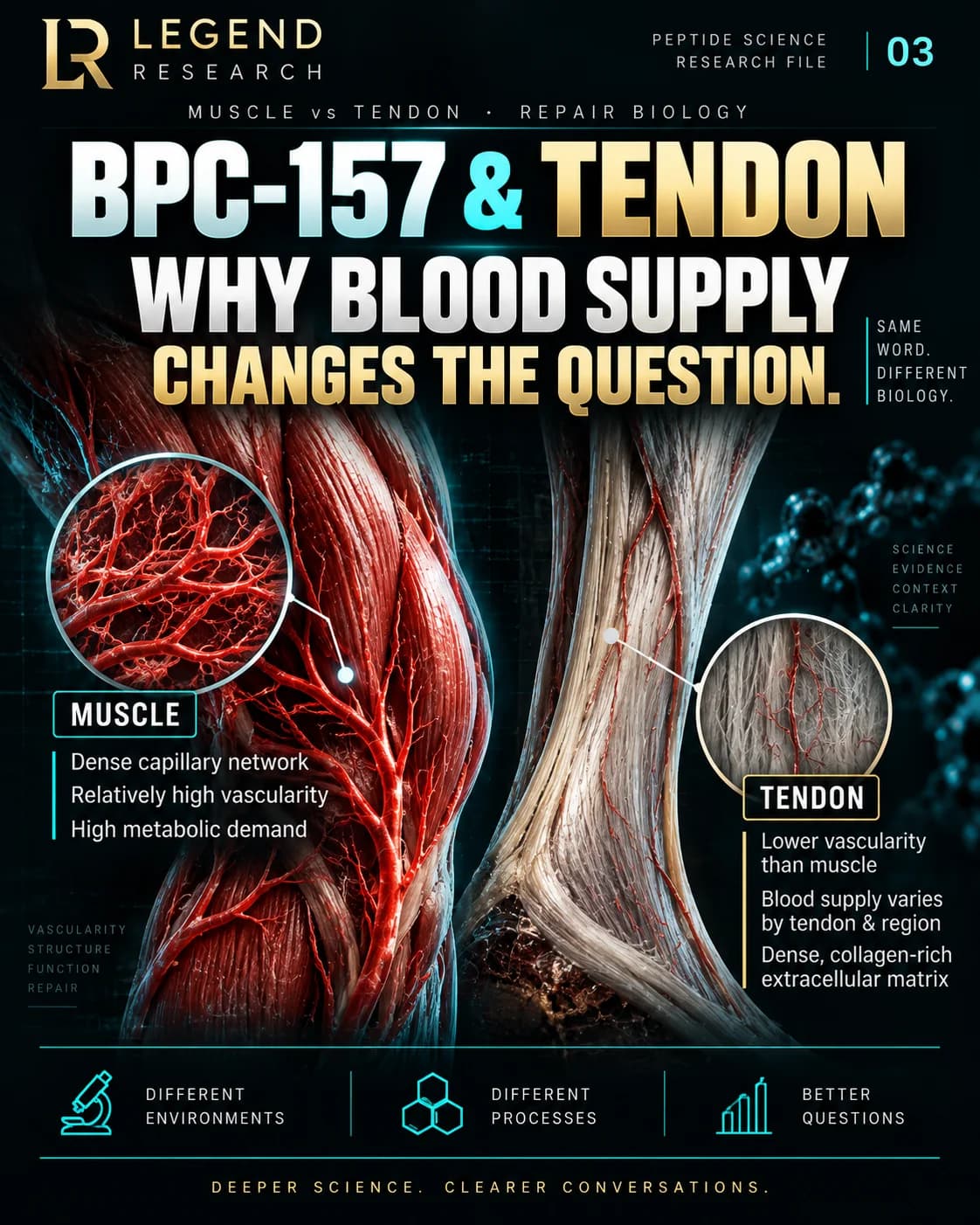
Why Does BPC-157 Research Keep Bringing Up Blood Vessels?
Why vascular biology keeps appearing in BPC-157 research, and why more blood vessels isn't automatically better healing
1 min
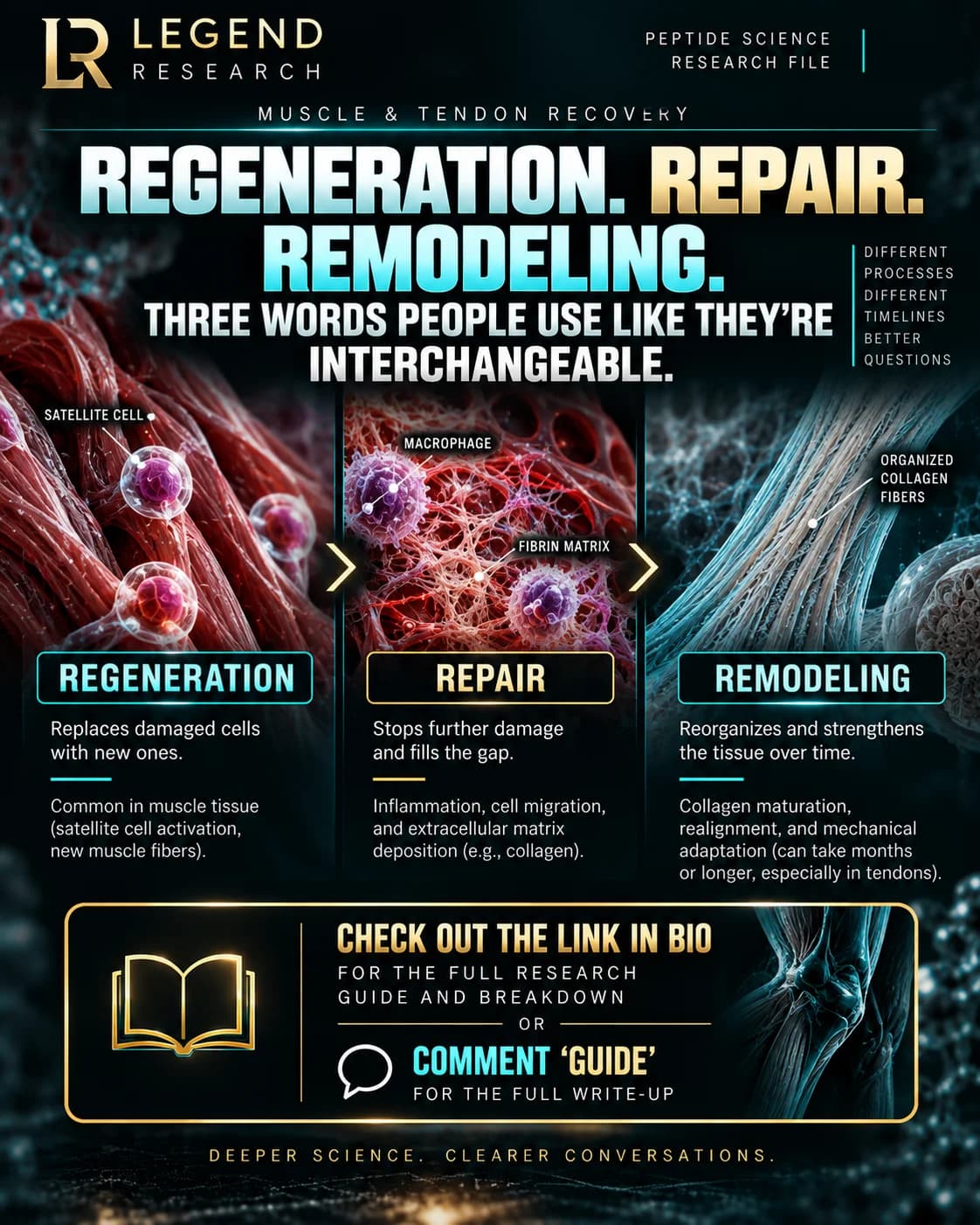
Regeneration. Repair. Remodeling.
Why regeneration, repair, and remodeling are distinct phases that BPC-157 tissue-healing claims often blur
1 min
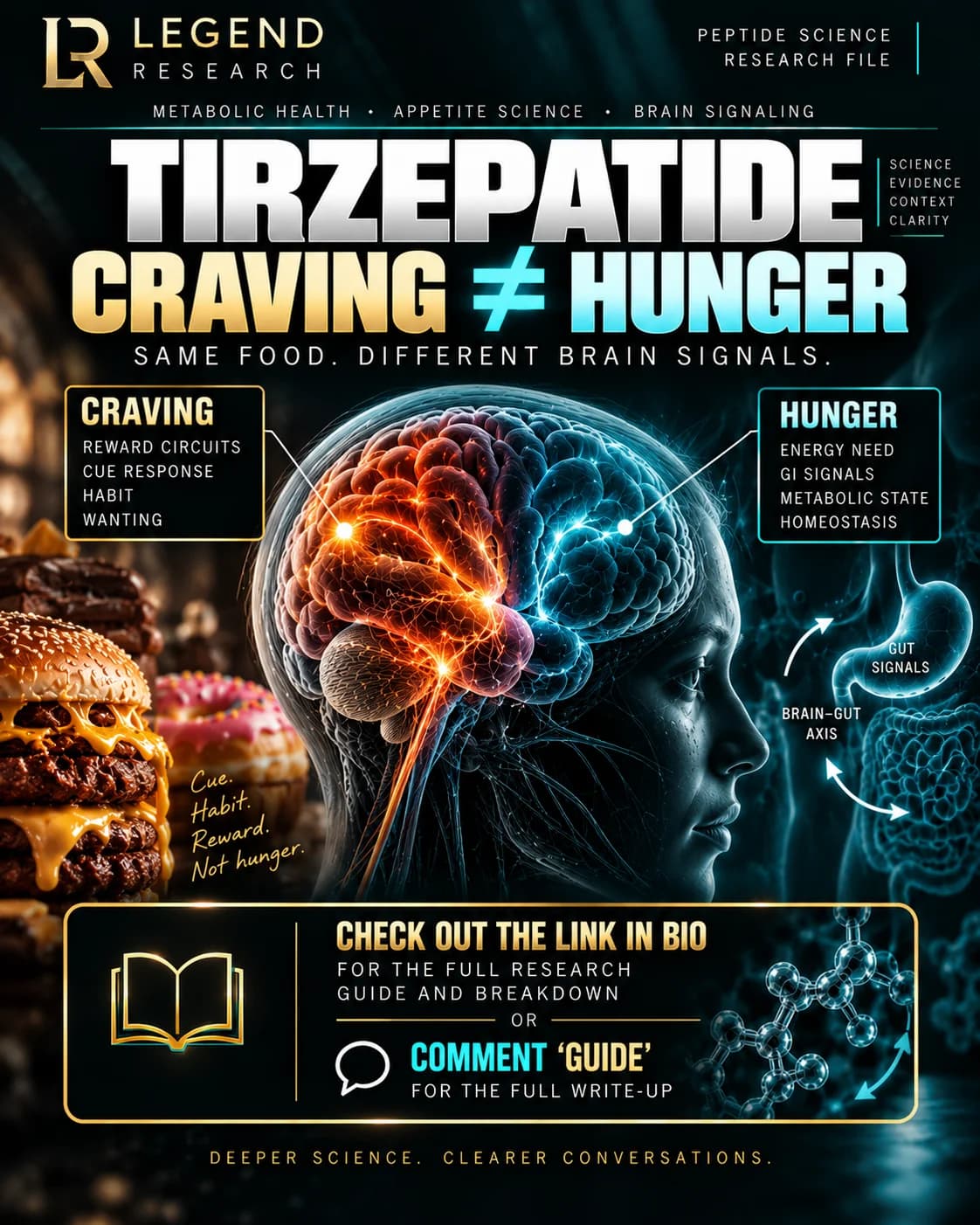
Tirzepatide: Craving ≠ Hunger
Why craving and hunger are different signals that tirzepatide research shouldn't compress into one
1 min
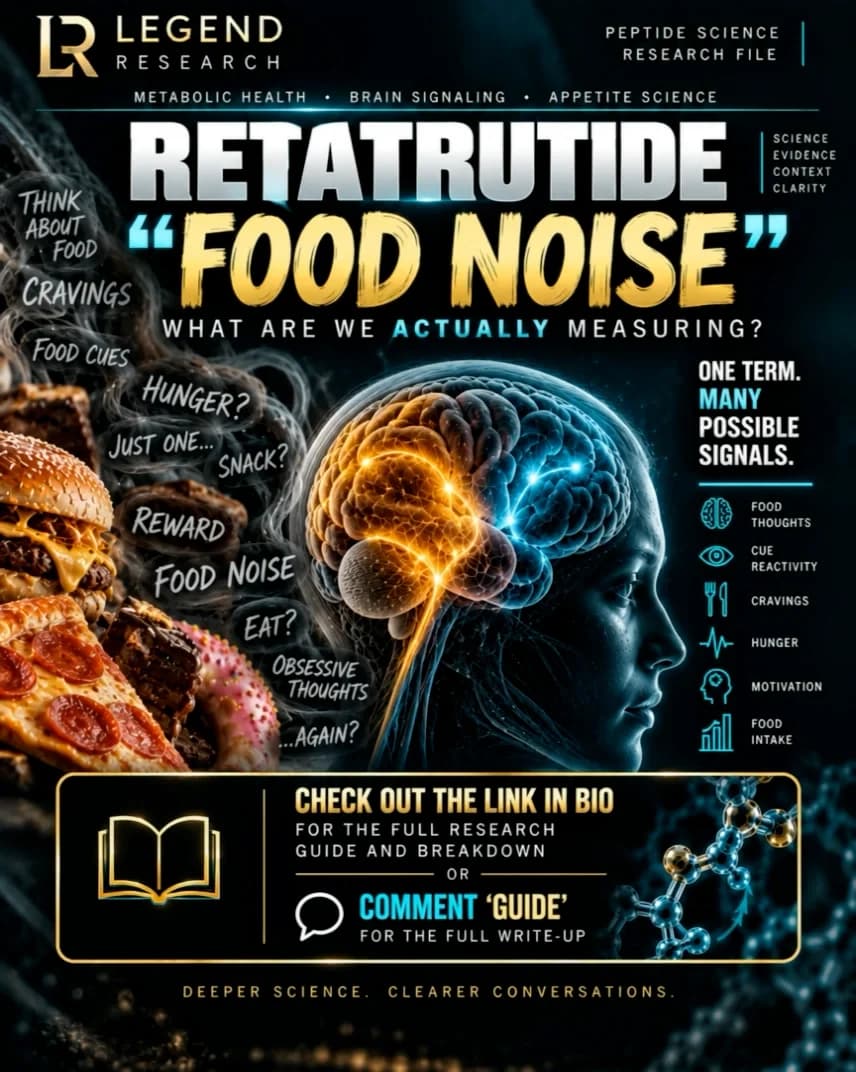
Retatrutide: “Food Noise”
Why “food noise” isn't one biological measurement, and what retatrutide research still needs to define
1 min
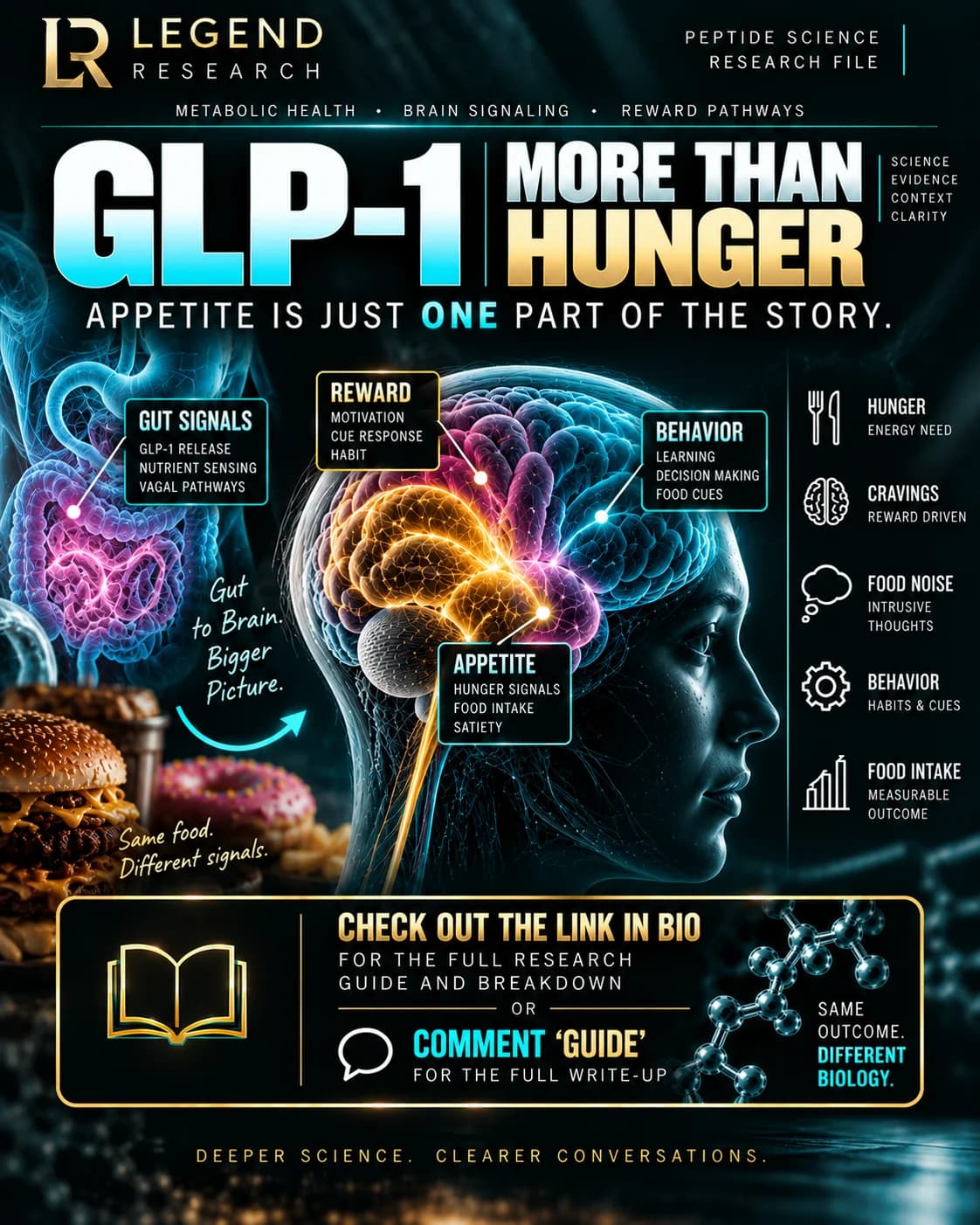
GLP-1: More Than Hunger
Why GLP-1 research spans hunger, satiety, cravings, and food cues, not appetite alone
1 min
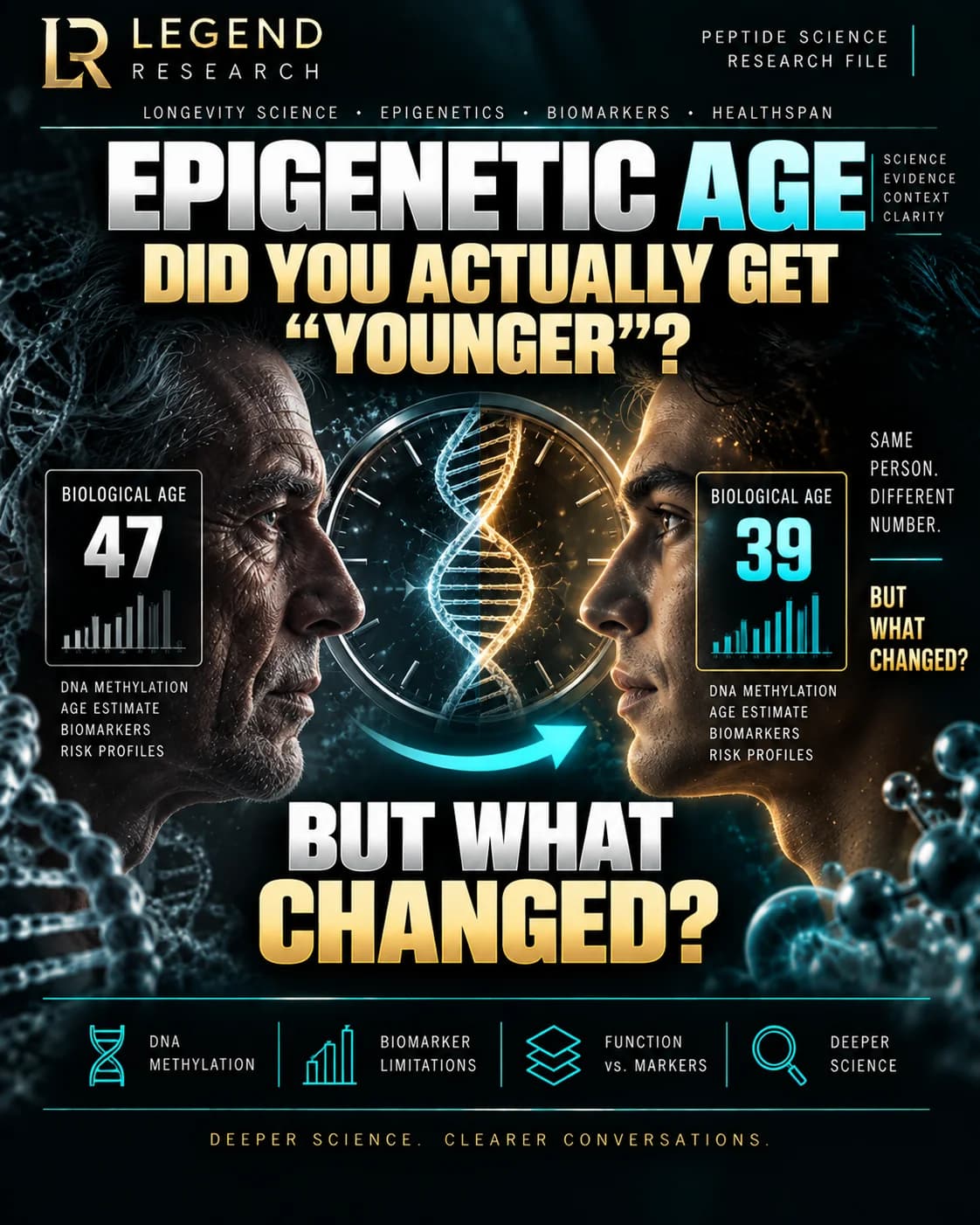
Epigenetic Age: Did You Actually Get “Younger”?
Why a lower epigenetic-clock score is a biomarker shift, not proof of whole-body rejuvenation
1 min
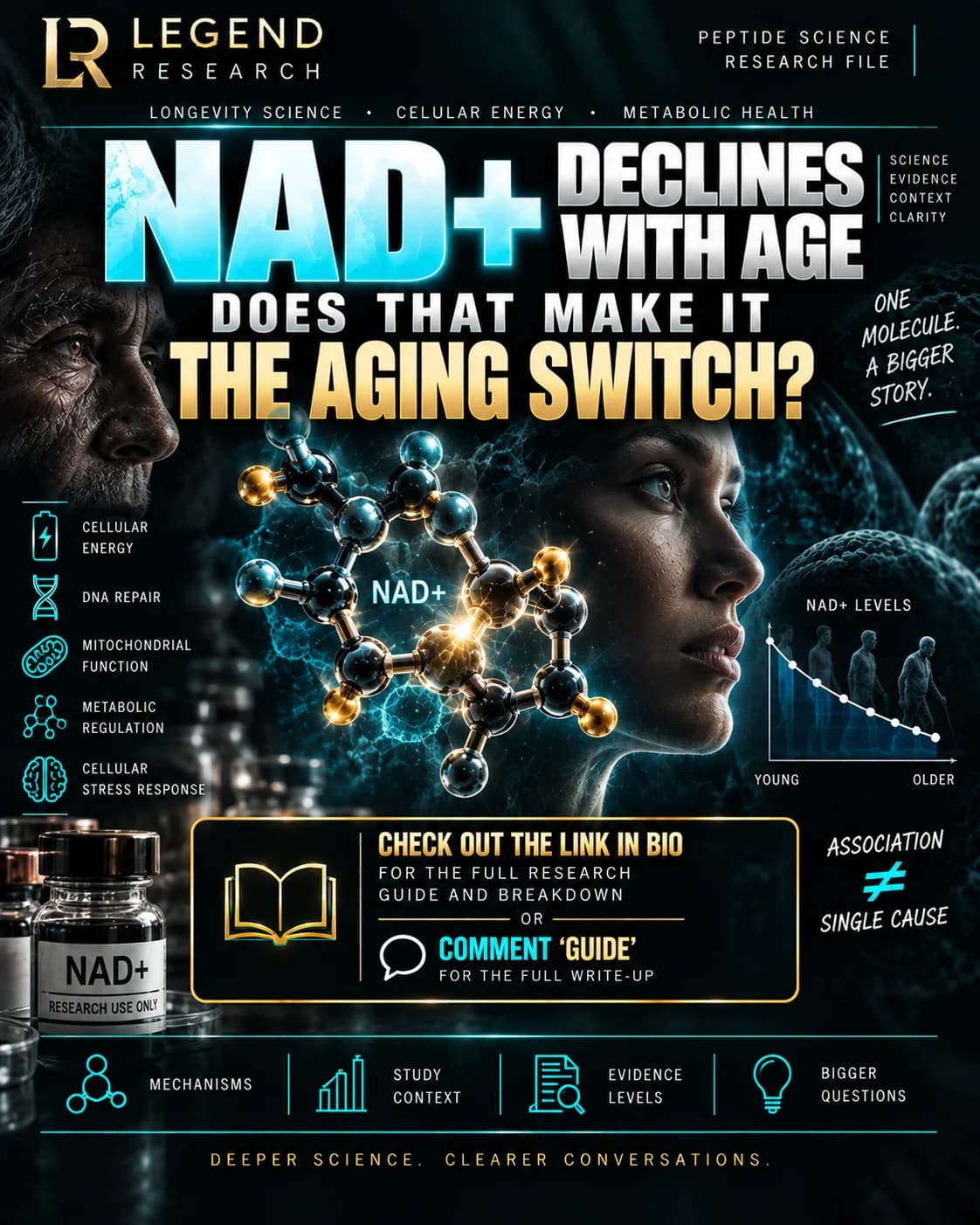
NAD+: Is It the Aging Switch?
Why NAD+ declining with age isn't the same claim as NAD+ being the cause of aging
1 min
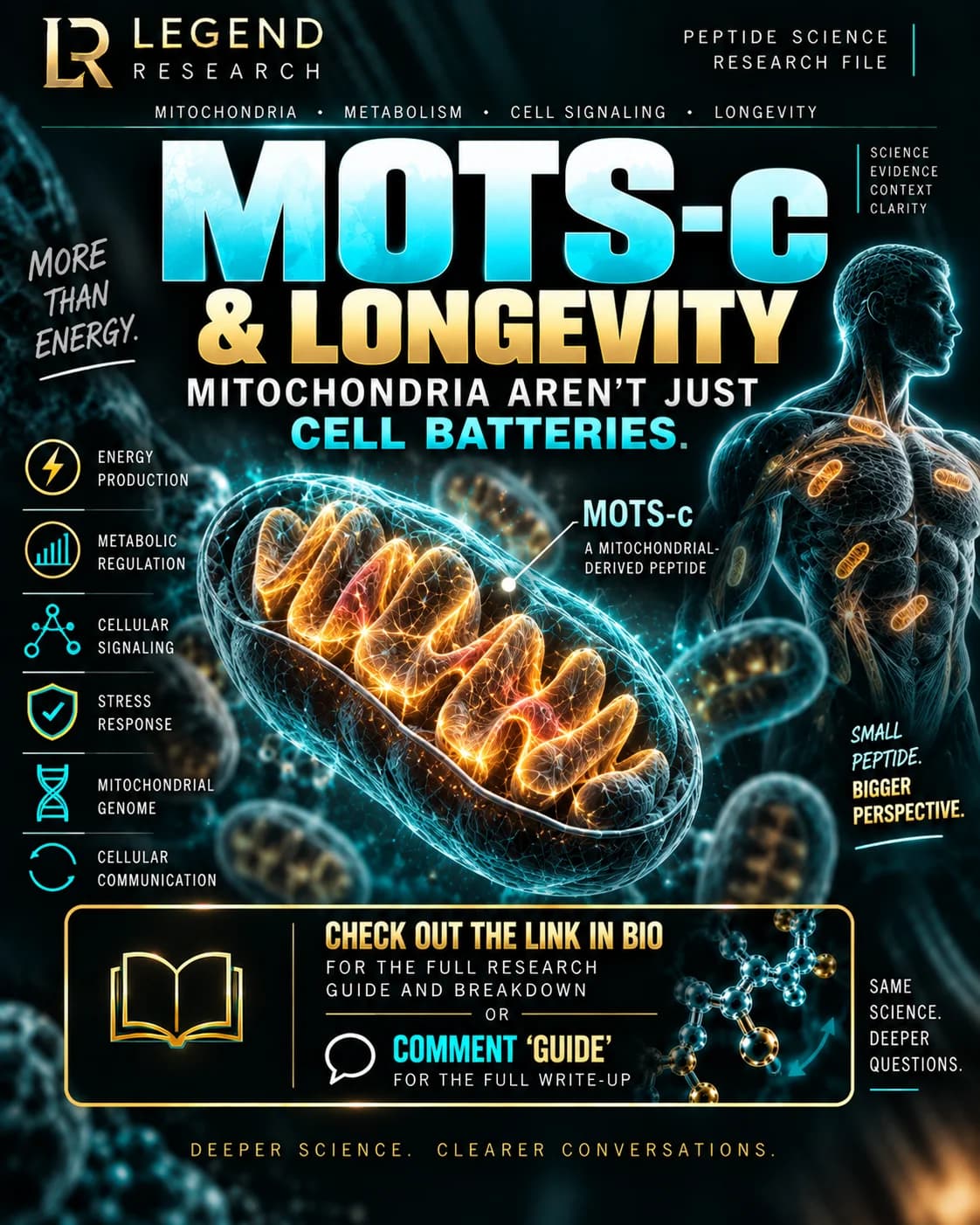
MOTS-c & Longevity: Mitochondria Aren’t Just Cell Batteries
What preclinical MOTS-c research says about mitochondria, metabolism, and the limits of calling anything an anti-aging switch
1 min

There May Be No Single Aging Switch
Why longevity research points to a network of interacting biological systems, not one master aging switch
3 min
GLP Receptor Agonists and Opioid Craving: What a Small, Messy Pilot Trial Actually Showed
A small Penn State pilot trial found liraglutide reduced opioid craving by 40% versus placebo, but only 9 of 20 randomized patients completed it — a much larger outpatient trial is now underway.
4 min
GLP and Nicotine: The 46% vs. 27% Signal, and Its Contradiction
A pilot trial found exenatide roughly doubled smoking-abstinence rates versus placebo, but a separate trial testing dulaglutide for the same purpose found no effect at all.
3 min
Retatrutide in 2026: Inside the Weight-Loss Industry’s Next Bet
Retatrutide's TRIUMPH trial program has posted the largest weight-loss numbers ever recorded in a Phase 3 obesity trial, while remaining unapproved anywhere in the world.
5 min
Your COA Says 99% Pure. But Is It the Right Molecule?
A purity percentage answers only one of three questions a research-grade peptide needs to clear: what's in the sample, what the molecule actually is, and what contamination might still be present.
2 min
Peptide Reaction? Look at Histamine First. Then Ask About Endotoxin.
A reaction after peptide administration is often a documented, molecule-specific histamine response (MRGPRX2) rather than contamination — but the two have different causes and different tests.
3 min
Retatrutide’s Three Receptor Pathways, Explained
GLP-1, GIP, and glucagon each play a distinct role in retatrutide's triple-agonist design — including the historically avoided glucagon pathway.
4 min
MOTS-c and Cancer Biology: Early Signals & Emerging Research — But Not Yet Answers
MOTS-c slowed ovarian cancer cell growth in lab and animal models, but a separate adrenal-tumor study found a more complicated, tissue-dependent pattern — this is early preclinical work, not a treatment finding.
4 min
Tesamorelin Targets a Different Fat Depot: The Visceral-Fat Research
Because visceral fat carries a higher density of growth hormone receptors than subcutaneous fat, tesamorelin selectively reduces visceral fat by 15.4% versus placebo with no significant change to subcutaneous fat.
3 min
GLP and Alcohol Craving: Three Trials, One Unresolved Question
Three trials testing GLP receptor agonists for alcohol use disorder disagree with each other — exenatide's brain-imaging signal didn't translate to drinking outcomes, while semaglutide's did.
3 min
You’re Running on Peptides Right Now: The Hidden Biological Network
Insulin, oxytocin, and endorphins are peptides your body already runs on — and roughly 40% of the receptors built to receive peptide signals still have no known natural match.
3 min
Big Pharma Can’t Own a Natural Peptide. So What Are They Patenting?
U.S. patent law bars ownership of naturally occurring molecules — so peptide-drug patents actually protect engineered modifications, manufacturing methods, delivery systems, and specific approved uses.
3 min
Peptide Studies Have a Population Problem: Who Was Actually Studied?
A 2020 analysis of 86 FDA-approved drugs found women reached higher blood concentrations at the same dose in 76 of them — a legacy of decades where women were excluded from early-phase trials.
3 min
Pharmacy vs. Research Supply: Same Molecule Name, Different Systems
Research Use Only material and an FDA-approved pharmaceutical are answering two different questions — lot-specific analytical verification versus clinical safety and efficacy in a defined patient population.
3 min