
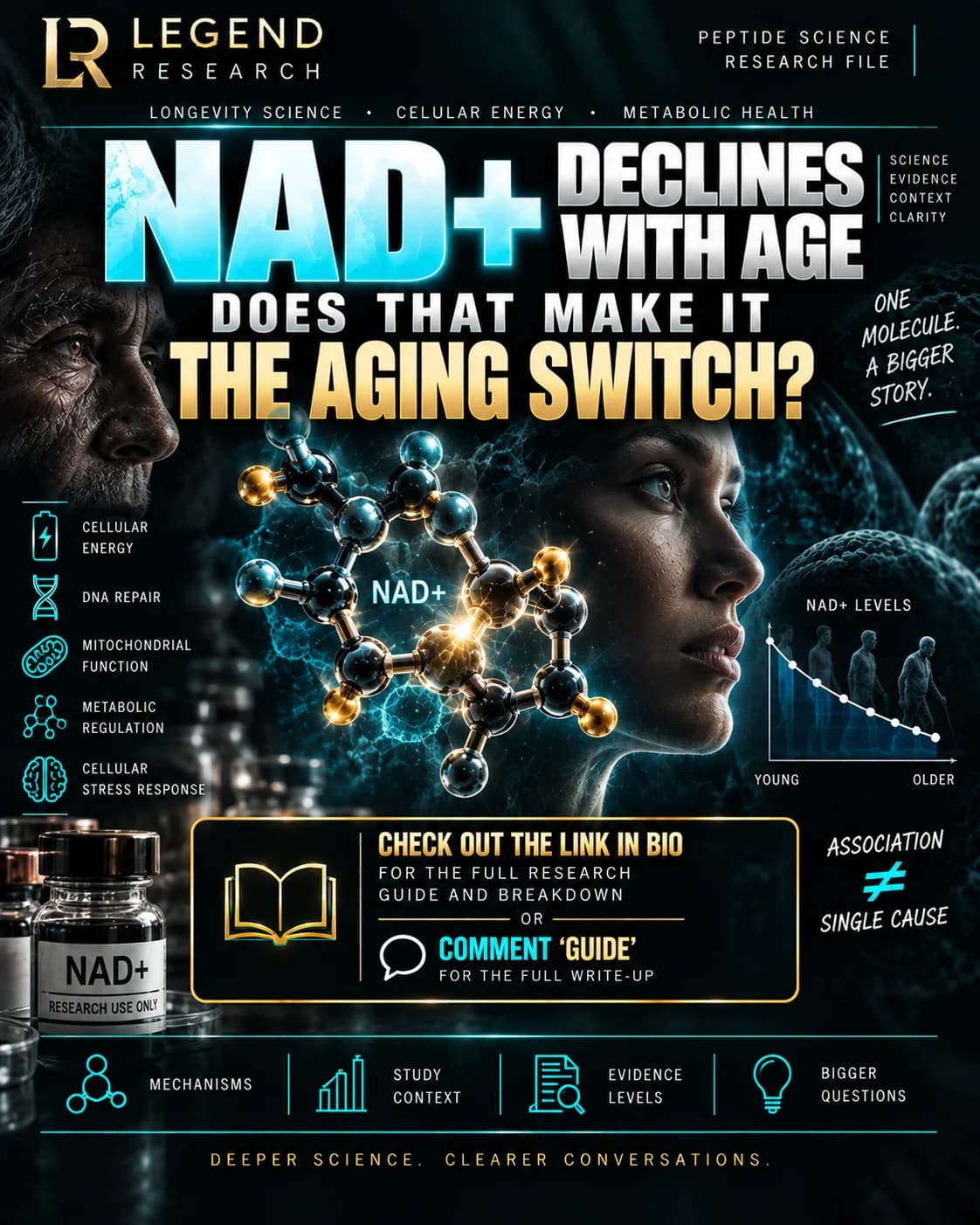
NAD+: Is It the Aging Switch?
1 min
The longevity story around NAD+ sounds simple: NAD+ can decline with age, NAD+ is important for cellular metabolism, so restoring it should make cells younger.
But there is a major step missing between those statements.
NAD+, or nicotinamide adenine dinucleotide, is essential to fundamental biochemical reactions. It participates in metabolism and is used by enzymes involved in cellular stress responses, DNA-related biology, and metabolic regulation. [1]
That makes NAD+ important. It does not necessarily make NAD+ the aging switch.
Aging isn’t measured by one variable. Researchers might examine mitochondrial function, glucose metabolism, inflammation, DNA damage, physical performance, tissue function, disease outcomes, or lifespan. Changing one measurement doesn’t automatically mean every other feature changed with it.
There is also a causality problem. If something declines with age, that does not automatically mean its decline is the single cause of aging. It could contribute to aging, result from other age-associated changes, or participate in a feedback loop. [2]
So even if NAD+ metabolism changes, ask:
What changed because of it?
Did mitochondrial function improve? Did a metabolic marker move? Did tissue function change? Did healthspan or lifespan change in the experimental model? And did the evidence come from cells, animals, or controlled human research?
One molecule can matter enormously without explaining the entire aging system. [3]
Legend Research Note
NAD+ biology varies across tissues and experimental contexts. Changes in NAD+ or related biomarkers should not automatically be interpreted as whole-body rejuvenation or proven lifespan extension.
Explore the Legend Research Library for deeper longevity research.
Further Reading
- NAD+ metabolism and its roles in cellular processes during ageing — Covarrubias et al., Nature Reviews Molecular Cell Biology 2021 — comprehensive review of NAD+ biology and aging.
- NAD+ precursor supplementation in human ageing: clinical evidence and challenges — Nature Metabolism 2025 — notes limited human clinical evidence for NAD+ decline and supplementation efficacy.
- Age-Dependent Decline of NAD+ — Universal Truth or Confounded Consensus? — Nutrients 2021 — critical review questioning how well-established the NAD+/age-decline claim actually is.
Continue the Research
For the identity, mechanism, and documented state of the evidence behind the molecule itself, see NAD+ in the Registry. And because NAD+ research claims are only as sound as the material tested, 99% Pure. But 99% of What? and Standards & Industry break down how purity and identity are verified.
Dispatch — Research Updates
Opting in means a real person from our team may reach out regarding your research inquiry.